
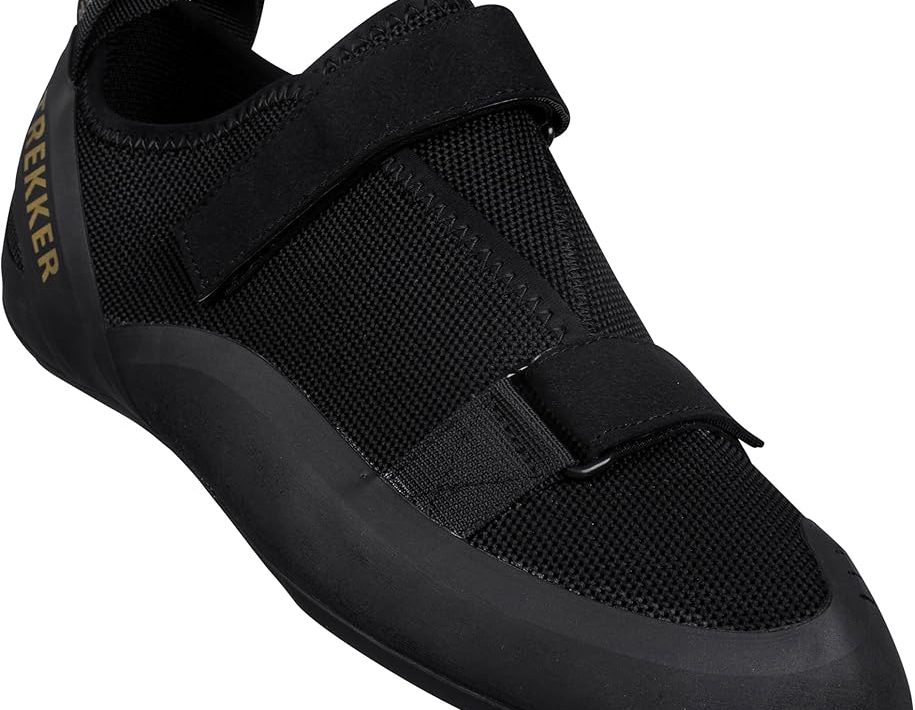
Great climbing shoes feel sharp at the edge and soft under the toes at the same time. That sounds strange, but it is the goal. You want to stand on a tiny chip without the shoe folding. You also want to feel the rock so your foot finds the sweet spot. Stitch design, material choices, and seam maps decide how much support and how much feel you get. Here is a simple guide.
Table of Contents
What edge stability really means
Edge stability is the shoe’s power to hold your weight on a small ledge without rolling. It comes from three parts working together. The midsole or platform. The rubber wrap around the forefoot. The upper and its seams that keep shape. If any part is weak or placed wrong, the edge bends and your foot works too hard.
Slip lasted for feel, board lasted for support
Two build styles show up often. Slip lasted shoes wrap the upper around the last and use the outsole and rands to create structure. They feel sensitive. Board lasted shoes add a thin board or stiffer platform under the forefoot. They feel stronger on long edges. You can blend them too. Many high performance shoes use a partial board in the forefoot and more open build under the toe tip to keep feel.
Stitch maps that protect sensitivity
Stitches can help or hurt. You want very few seams under the forefoot where pressure is highest. When seams must be there, place them off the big toe contact and off the outside edge.
- Keep forefoot seams behind the met heads by 5 to 8 mm so they do not sit on the pressure point.
- Use short, curved seams that flow with the foot shape, not hard L turns.
- Round every corner with a 6 to 8 mm radius so holes do not crowd.
- For toe boxes with split panels, run joins along low pressure valleys, never across the big toe nail line.
Stitch type, length, and SPI
- Use lockstitch 301 for structural joins. It is tidy and predictable.
- Set stitch length 3.0 to 3.5 mm on construction lines to reduce hole count and avoid a perforation path.
- Keep SPI moderate. Packed holes can start cracks in high stress curves.
- Press a shallow stitch channel where top lines run so thread sits a little lower than the wear plane. This protects the seam during smears and toe drags.
Thread and needle choices
- Corespun polyester sewing machine thread is a good default for uppers and rands. Strong for size, smooth running, low water pick up.
- High tenacity polyester at stress points like eye stays and heel sling joins.
- Choose the finest passing ticket that meets strength to allow a smaller needle. Smaller holes preserve leather or microfiber strength.
- Use micro point or light round needles NM 80 to 90 depending on stack. Coated needles lower heat so edges do not glaze.
- Polyester embroidery thread for logo.
Upper materials and lining
Leather molds well but can stretch. Microfiber holds shape and dries fast. For edge stability, a layered upper works.
- Use a firm microfiber or split leather on the outside for structure.
- Add a thin lining only where you need hold, like the medial big toe wall and lateral edge.
- Keep the toe tip unlined or lightly lined so feel stays high.
- If you add a gusseted tongue for comfort, keep gusset seams back from the toe flex zone.
Rand and rubber layout
Rubber does a lot of the edge work. The side rand should climb higher on the outside edge to act like a beam. The medial wall needs support for the big toe push. You can taper thickness so the toe tip stays sensitive while edges stay strong.
- Wrap the forefoot with a continuous rand strip that has no butt joint on the load path. Put the join under the arch.
- Use narrow bond lanes, 3 to 4 mm, with well scuffed surfaces. Then cool clamp for 2 to 3 seconds to set memory and stop micro spring back.
- Keep the outsole thinner under the big toe pad if you want more feel, but pair it with a firmer sidewall to hold edges.
Heel and midfoot tension systems
Edge control is not only the front. A stable heel holds the whole lever. Use a slingshot style tension band that pulls from the heel to the midfoot. Stitch attachment points should spread load.
- Use two short wide tacks 3 to 4 mm wide rather than one long bar at the heel band ends.
- Place reinforcement tapes inside allowances to avoid bulky patches that can rub the Achilles.
Closures that do not kill feel
Laces give micro fit. Straps are quick. Both can work.
- For laces, offset the eye row so knots do not sit on the top flex of the big toe. Add small washers under metal eyelets so they do not cut fabric.
- For straps, keep stitch lines out of the toe flex so the panel can move. Use soft backers so you do not add a hard ridge.
Simple tests you can run
- Edge hold on blocks
Cut wood blocks at 3 mm, 5 mm, and 8 mm. Stand on each with the big toe edge. Rate roll. If the edge collapses, increase side rand height or add a partial forefoot board. - Toe feel on grains
Stand on fine grit paper with the toe tip. Try to feel a tiny groove. If you cannot, thin the outsole at the tip or move the seam behind the met head. - Flex fatigue
Flex the forefoot 10k cycles. Check for stitch white lines or rubber lift at the rand. If you see lift, widen bond scuff or lengthen stitch to cut hole crowding. - Warm fit repeat
Climb for 30 minutes. Let shoes cool. Check if the edge changed. If yes, add lining only to the edge walls to hold shape.
Troubleshooting quick table
| Problem | Likely cause | Fast fix |
| Edge rolls on 5 mm ledge | Low side rand or soft forefoot | Raise rand height and add partial board under met heads |
| Toe lacks feel | Thick outsole at tip or seam on flex | Thin toe tip rubber, move seam back 5 to 8 mm |
| Stitch cracking at corner | Tight radius and high SPI | Radius 6 to 8 mm, lengthen to 3.2 mm |
| Rand lifts after sessions | Under scuff or hot needle holes | Improve scuff and solvent flash, use coated needle |
| Lace bite on top flex | Eye row over met head | Shift eye row, add soft tongue pad, shorten bar tacks |
Tech pack lines you can copy
- Stitch 301 construction length 3.2 mm, channels on top lines, corner radius 7 mm
- Thread corespun polyester for runs, high tenacity at eye stay and heel band ends
- Needles micro or light round NM 80 to 90, coated type
- Rand continuous strip join under arch, bond lanes 3 to 4 mm, cool clamp 2 to 3 seconds
- Platform partial board under met heads, thinner toe tip outsole for feel
- Seam map no forefoot seams over big toe pad, gusset seams behind flex
Wrap
Strong edges and smart feel can live together. Keep seams off the toe pressure zone. Use longer stitches and small needles. Build firm sidewalls and a thin, lively toe. Tension the heel without hard bars. Test on small blocks and in real climbs. Tune one change at a time. Do this and your climbing shoes will stand on tiny edges while still telling the foot what the rock is saying.